
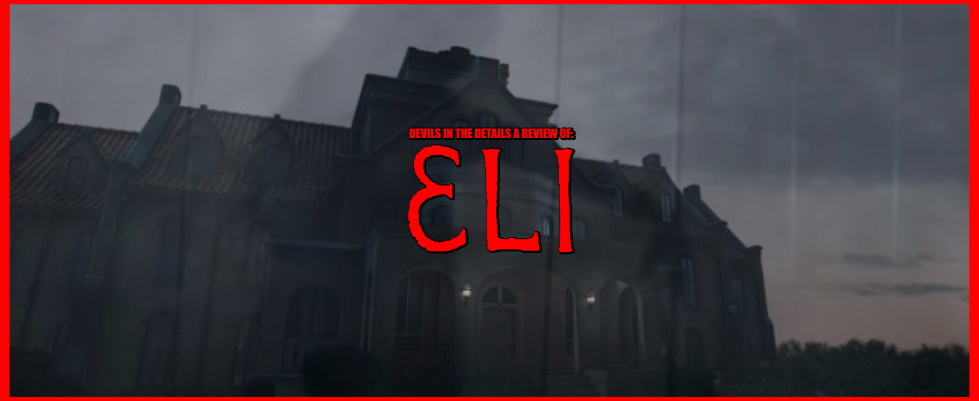
Eli (2019): a promising beginning and a severely disappointing, forced ending. While watching this film, I was at times painfully aware of the time constraints I presume they were under during production. It was as if they began feeling relaxed, confident and certain of their plot points. The themes were consistent, the style grew and evolved with the characters and the progression of suspense was genuinely well-paced and goosebump-worthy. But then by the end of the third act, it’s like time ran out and a good deal of the budget remained. So they scrambled, like panicked mice in a testing facility, to complete the denouement and needlessly spend what was left of the budget. Little time and swathes of money never bodes well, at least not in the world of cinema.
Beginning as an intriguing narrative and potential social examination into stigma surrounding rare immunological diseases, Eli had me hooked. I genuinely enjoy psychological thrillers/horrors that create something deeply disturbing out of something as ubiquitous as the human body. Unlike a zombie flick, these ‘disease horrors’ terrify the viewer of what could lurk within your very own skin and what lies behind certain ‘state of the art’, newfound treatment methods for rare conditions. Call me Girl Interrupted if you need – I will never get enough of films that make you feel uncomfortable in your own anatomy. So when little Eli is introduced as having a strange, sparsely explained autoimmune disorder and that he’s being sent to an isolated, creepy manor in the countryside to have it treated, I was on-board.
The setting, though by far not a pioneer of its kind, is effective enough. Replete with dark corners, heavy materials and furniture that seem to suffocate each cavernous room and constant dreary weather (bless the pathetic fallacy), it is a classic haunted house ready to be played with. Add it being a weird, non-official hospital for children to the mix and I am already sufficiently creeped out. The haunting itself – moments of sheer fright when you finally catch a clear glimpse of the various sinister, deteriorating ghost children in mirrored surfaces – is controlled and limited. Director Ciaran Foy doesn’t give you the chance to become desensitised to just how grotesque these spectres look and it is always done in a slightly different way (behind a curtain, in a mirror or completely out of frame – you merely see the dreaded consequences of their presence), so you’re kept on your toes.
All good so far, yes? I was convinced that Eli just finally a horror (and a Netflix one at that!) that wouldn’t try to hold your hand through the storyline, painfully explaining each twist and turn at length. I loved trying to work out why the apparitions were flipping his name, ELI, into ‘LIE’ (or, as later revealed, the number 317), what the deal was with the insidious-looking nurses and head-doctor (kudos to the fact that they were all women though – women doctors need more representation) and what exactly was going on with Eli’s disease (because so little was ever actually properly explained and the father seemed shady about it throughout). Sadly, it turns out that it isn’t just the viewer who sits there not knowing how it’s all ultimately going to pan out. The creators clearly had no clue either. All of a sudden, within the space of about 5 minutes, the film goes from being an interrogation into the psychological condition combined with the physical condition of a young child and what that does to their family dynamic to a movie about the devil. That’s it. The devil. No other explanation.
Talk about an easy out. Instead of extending the truly interesting and unique aspects introduced earlier on, they give up and decide to blame all the strange goings-on on Lucifer because he is, after all, the easiest person to blame since he is evil incarnate. It erases all elements of emotion, individuality and humanity from the plot. And that just isn’t scary. It becomes a cliche, cringe-worthy teenage movie where two young kids leave a burning building behind feeling badass for no good reason at all.
If you want to watch a movie about the devil’s child, go watch The Omen. Or if you want to watch an interesting, one-of-a-kind horror, watch Eli but make sure to stop it approximately 20 minutes before the end. Just as we all need to redirect our attention and blame back onto our own collective faults in society at large today, horrors need to stop using the devil-card and begin considering just how terrifying we humans can be.



 Nell's Little Shop of Horrors