Texas Chainsaw Massacre (2022): Bloody Laugh Riot

Blog

What number must this be now? Ten? The Texas Chainsaw Massacre franchise has certainly made much more than just a name for itself, and it’s clearly aiming to bleed that idea until it’s completely dry (partial pun intended).

Beginning way back when in 1974, the iconic ‘Leatherface’ villain has gone through myriad re-writes, reboots and re-interpretations. I’m struggling to understand who Leatherface is meant to be behind the meat mask, if he is even meant to have any kind of personal identity to begin with. I prefer an antagonist whose flaws go beyond mere brutality and sadism. I seek out horrors that paint the ‘heel’ as driven by an intimate backstory and deeper motivations that can be traced back not only to their childhood, but to their inner psyche. Some of you may insist that the death of his ailing mother at the beginning of the film is sufficient enough to motivate his gruesome rampage. But at the end of the day, the ‘out for revenge for my beloved, sickly mother’ plot line should finally be laid to rest, not used as an excuse to run yet another rendition of an already exhausted franchise.

Narrative criticisms aside, this year’s version of Texas Chainsaw Massacre is pleasantly surprising where gore is concerned. With a name like its own, viewers aren’t paying money to see a critically-complex narrative arc, they’re paying money to see what new, innovative kills filmmaker David Blue Garcia can imagine and then recreate on-screen. In this way — and in this way alone — the film is a success. When the first person to die does so by having their forearm flipped downwards with so much force that it breaks like a twig and is then stabbed in the jugular with their own protruding bones, you know you’d better settle in for an extremely gruesome ride. The deaths in this film were pretty nuanced, making use of a plethora of weapons (never forgetting the return of the classic chainsaw, of course). The large-scale bus massacre of tech-obsessed and desensitised millennials could have even been viewed as an attempt at some superficial social commentary — Leatherface could equally not give less of a shit about your Instagram aesthetic, Sandra, so put the phone down and ‘live’ in the moment. Is the violence gratuitous? Of course it is. This movie literally has the word massacre in it, so I expected and demanded nothing less.

Bringing Leatherface to the age of social media, 20-something-year old tech moguls and self-driving cars obviously presented more than just a few growing pains. I’m not sure if Blue Garcia was trying to comment on how modernity will still always give way to the old and traditional (their phones were clearly of no use against what would now be like a 50 year old chainsaw?) or if he was warning us against attempting to combine old-school/small-town values with behemoth Silicon Valley ideals? If any of those guesses hit the nail on the head, I still think this was far too superficial of a film to effectively achieve either. The acting deserves barely any comment and the entire premise explaining why these kids were even at that town in the first place was as tenuous as the idea of that skin mask staying so perfectly on Leatherface’s head the whole time.

If you enjoyed the first nine (or however many it is) for nothing more than their laughable exaggeration of gore, then have at it. But if you are searching for something deeper or are sick of directors spoon-feeding us the middle finger to millennials, steer clear.

Army of the Dead: Ocean’s 11 Meets World War Z

Blog

Jack Snyder’s new 2021 Netflix film, Army of the Dead, is a complete joyride from start to finish. Absolutely jam-packed with wit, self-conscious cliches and enough blood and guts to fill an industrial wheat silo with, this is your classic zombie flick with a sweet twist.

Blurring together two genres that I tend to never get enough of – the big heist and zombie apocalypses – Snyder’s piece picks out the best from both in order to avoid running into the never-ending cycle of predictability and dryness that most heist and zombie films are now cursed with. Using the cliches to their advantage, every time you are able to predict what is about to happen, it is imbued with irony or humour to lighten the mood and scream, “we know what we’re doing, we know what our audience is thinking, we’re clever filmmakers”.

Another interesting concept is the ‘isolated’ apocalypse. The entire movie is concentrated on the quarantined area of Vegas that has been afflicted with the zombie virus, but then quickly cordoned off for the nation’s wider safety. Small-scale apocalypses are much more fun – it feels more like a terrifying, life-or-death amusement park rather than an actual ‘we’re literally never going to escape this’ scenario that makes most zombie flicks rather depressing. Vegas is known in itself as an adult’s amusement park so the place setting was chosen perfectly – a place of social and moral perversion now combined with physical perversions of existence. Placing boundaries within a horror/thriller is sometimes necessary in order to more clearly define the goals and ambitions of characters and to prevent overwhelming the storyline and this is done with class in Army of the Dead. Synder takes the whole “what happens in Vegas stays in Vegas” to a whole other literal level.

As if heist movies didn’t have high enough stakes generally, this film makes an already adrenaline-fuelled genre even more exhilarating. Not only is jail on the line, but death, zombie-fying and oh yeah, getting blow to bits by a nuke. Army of the Dead is extremely self-reflexive in its ability to acknowledge just how ridiculous the concept is (and how ridiculous most zombie and heist plots are) and run with it, exaggerating every turn as much as possible so as to elicit both laughs and some incredibly aesthetic apocalyptic shots of Vegas.

Finally, the ‘sentient’ alpha zombies with true feelings… What a twist. This was the cherry on top of the cake as it is most likely the first time you actually feel sympathy for the undead (except for the likes of Warm Bodies but let’s please just pretend that movie was never made). The zombies gather into a collective army or tribe, something which most zombies are too stupid to organise. They’re just trying to mind their own business in their little Vegas kingdom but humans continue to get up in their business. Typical humans – we are too greedy for our own good and we can’t leave anything alone. Yet another reason why it is set in Vegas, an area that symbolises our greed and gluttony.

Great physical and special effects, a heavily ironic script, the glitz and glam of Vegas turned into the glitz and glam of zombie mania and a wonderful example of genre-bending, Army of the Dead is a rare example of a Netflix film (that lasts for two and a half hours, I might add!) that actually captures and holds your attention for its entirety.

Ma: Anti-Bullying PSA

Blog

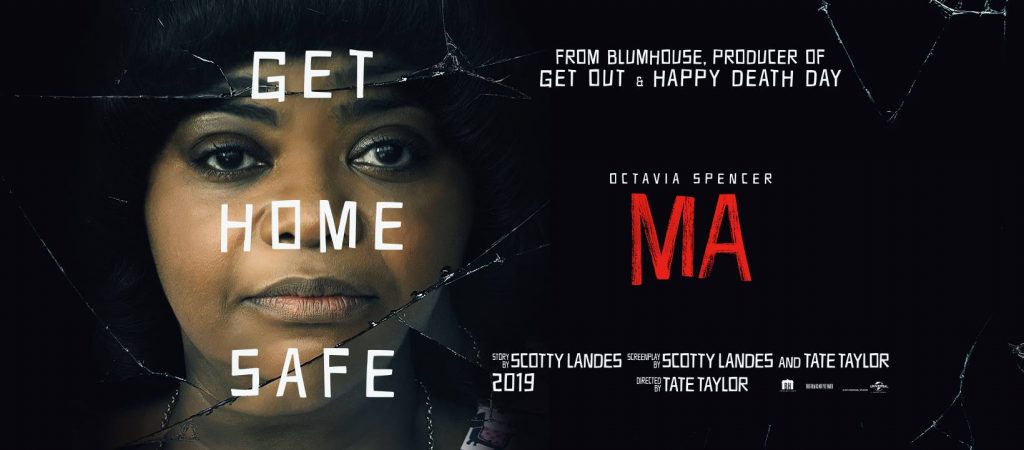
Ma (2019) honestly just made me feel really sad. Less of a spine-chilling horror and more of a slow burn, this film interrogates aspects of loneliness and childhood trauma in ways that make you reflect upon the nasty things you’ve had said to you or even the nasty things you’ve said to others in the past. Obviously, Ma is your classic worst-case scenario, but it still makes you question just how far loneliness can push someone…

Octavia Spencer is a powerhouse actor that honestly brings the grit and depth to this film that is otherwise lacking in its plot and dialogue. Her natural, organic ‘happy-go-lucky’ and homely look gives her a false approachable-ness that makes for a fantastic horror figure. You inherently trust in those doe-eyes of hers which makes it all the more confronting when you realise that she is, in reality, a psychopathic killer on the hunt for some sweet revenge. The nuance in her depiction of ‘Ma’ makes for an entertaining watch and it is a brilliant side-step from her usual role of the strong, sassy, loveable woman. She will give you mixed feelings and that is the beauty of her performance.

Another success of this film is its ability to make the viewer relate to and almost pity the antagonist. Ma is isolated, she has spent her life believing in taunts like ‘loser’ thrown at her throughout her childhood. All she really wants is to feel a sense of belonging, which she temporarily experiences with this group of high school kids. Granted, it is extremely unnerving seeing a grown woman (who is believed to not know any of the teenagers) party with and buy booze for a bunch of naive, underage people. But it is this strange desperation that draws you towards Ma. We have all been in place where we yearn to belong and to feel accepted.

Not all of us harbour life-long grudges against their wrong-doers, however. Ma obviously takes revenge very seriously and will not rest until all of her enemies are knocked off, one at a time – leaving Ma as queen bee amongst the children of those that she just brutally killed? Not much logic there, but I assume Ma’s rational logic sort of flew out the window as soon as she sewed that chatty girl’s mouth shut with a blunt needle.

This movie is fine, saved mainly by Octavia Spencer’s glittering talent. Did it make me shiver or plunge into existential consideration (as many horror movies tend to do actually), no. The only lessons I could really elicit from it were to avoid bullying anyone and to be wary of strangers. But neither of these lessons are revolutionary. I will accept that it is always enjoyable watching a group of annoying teenagers forced to swallow their egos thanks to a collective near-death experience. That never gets old.

Midsommar: Should have just gone to IKEA

Blog

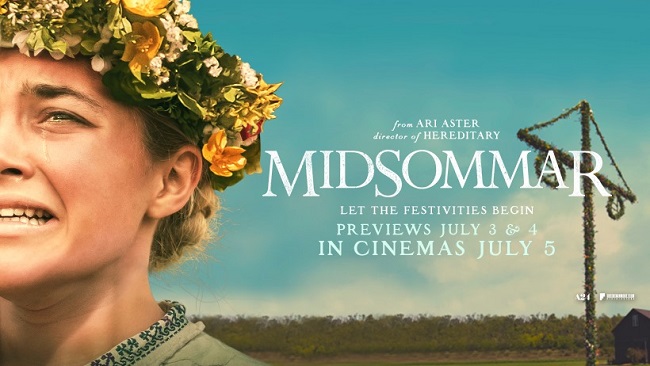
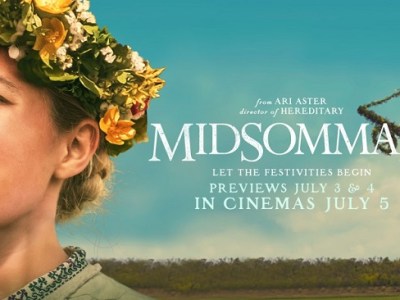
Planning to watch Midsommar (2019)? The best advice I can give you is to prepare yourself for repetitive doses of extremely loud and spine-chilling moaning, sobbing and filleted bodies. Ari Aster, back just a year later from the revered Hereditary (2018), serves up an incredibly thought-provoking and mind-bending depiction of rural Swedish Pagan ritual and what happens when outsiders doth intervene.

Taking the ‘us vs them’ concept to an entirely new dimension, Midsommar deeply interrogates issues of dependency, worship and idolatry and the fragile cycle of life. Following the four oblivious American outsiders into this seemingly idyllic, yet strange, Swedish Midsommar festival is akin to following innocent lambs to the slaughter. Descending into the utterly surreal, it is as if we the viewers have partook in the ‘substances’ forced upon these unfortunate souls – we watch this film as if under a drug-induced haze, feeling paralysed in our seats as we watch these victims crawl towards their ritualistic end.

And yet despite the horror and gore evident in this cult-like assembly, there is constant scenes and elements of beauty to admire throughout. The gentle, vivid, natural colour palette – bright greens grass, baby blue skies, egg-yolk yellow wooden huts and multi-coloured flowers abound. Nature and the natural cycle of life are key motifs in Midsommar. After all, Dani essentially becomes one with the Earth, seemingly sprouting branches, leaves and blooming flowers as she watches the fires consume their human sacrifice. The cycle is completed in that moment and the fine line between life and death that is played with throughout the film is officially blurred.

Hindsight is vital after watching Aster’s work. I left not knowing what on earth I had just witnessed – creepy orgies, disembowelled bodies that have been stuffed with hay and dressed up as medieval Jokers, more group cry sessions than I can count… I was lost. But upon reflection, I was able to recognise the messages inherent in its bones. Dependency is debilitating, life is short and fragile, we are one with the Earth’s cycle and, of course, never agree to go to someone’s strange 90-year sacrifice festival.

Orphan: Not the best ad for adoption services

Blog

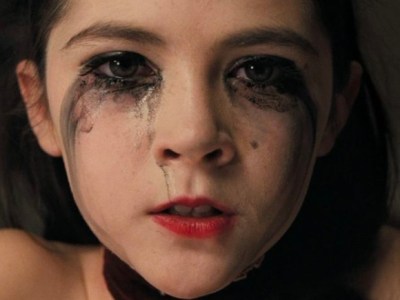
Jaume Collet-Serra’s horror, Orphan (2009), is an interesting examination of grief, development and the process of moving on – or rather the inability to do just that.

The plot is sprinkled with motifs of stunted growth, dysfunction and stagnation. Their child is almost entirely deaf, the parents are trapped in a superficially ‘perfect’ marriage that realistically is a cage of lies and distrust, the mother endured a stillbirth that continues to haunt the family and the adopted, demonic Esther turns out to be a 33-year-old psychopathic woman with an extremely rare form of dwarfism (aka stunted growth). Every plot point is either premature or tainted with trauma from the past.

While not being quite the right film to show your friends that are considering adoption, it effectively captures a tortured domestic scene that, although obviously exaggerated and slightly outrageous for entertainment purposes, reflects the struggles that many people experience: loss of a child, raising a child with an impairment of some kind, unfaithfulness and the stress of major change. Yes, Esther is a physical character in the film. But she metaphorically stands for much more than that. She represents the festering dysfunction between the parents, Vera’s repressed alcoholism, the father’s wandering eye and much more. She is the epitome of everything that was already wrong with the family, a symbol of repression, deceit, dysfunction and facade.

Orphan elicits responses of discomfort and frustration rather than explicit fear and suspense. It slowly and subtly crawls under your skin, each action and decision infuriating you more than the last. You are left with a sense of helplessness that many horror films do not know how to properly deploy. This helplessness and frustration are products of horror that can leave you more psychologically drained than any plain-jane jump-scare sequence. Collet-Serra presents an impossible scenario with no obvious escape – who could suspect a child of such heinous crimes? – that dooms both the characters and the viewer to a downward spiral. There is literally never a perfect moment in this film and that is ironically what makes it a good film.

Not without its plot-holes – not in a million years would you find a legitimate American adoption service adopt out a child that they realistically knew nothing about and no way could two tiny girls pull a grown nun off the side of the road alone – Orphan is not your average horror film and it finds its success in exactly that. Don’t watch this movie is you are searching for a supernatural, blood-curdling saga. Watch this movie if you want a psychological thriller filled with swathes of domestic social commentary.

Crawl: Florida’s “Jaws”

Blog

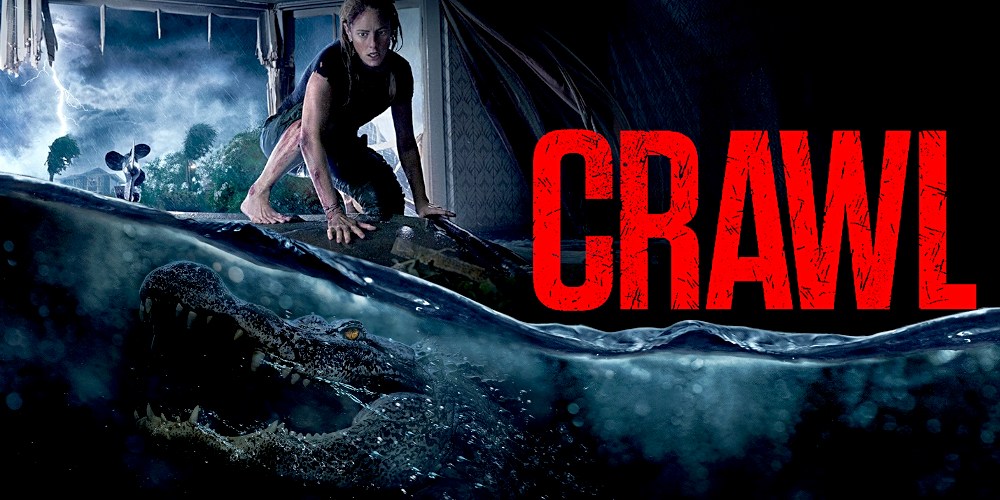
We all knew well before this that Florida is a pretty wild place and yes, there are a lot of gators there. But two giant alligators in a crawlspace under a house? And what seems like an entire alligator-infested ocean right outside said house? Didn’t quite see that one coming – even for Florida.

These films are not made to be taken seriously and it’s for that reason alone that I enjoy them so thoroughly. You watch them to get your fill of suspense and hokey dialogue, not to discover the next greatest auteur. Crawl (2019) is like Jaws‘s younger, slightly disappointing sibling hopped up on Ritalin. Alexandre Aja chucks it all at you with no inhibitions. Massive storm, flooding, loss of connection to emergency services and giant, hungry alligators to top it all off. All the odds are against Haley and her father, and yet you just know they will triumph. Despite the fact that an alligator bite has the force of 2960 pounds…

Considering this film was produced in 2019, the CGI still leaves a bit to the imagination. I could quite easily pick out the use of green-screens and rushed integration scattered throughout the piece. The speed at which the catastrophes gain momentum and accumulate truly tests your disbelief. One second they are trapped within a (admittedly severe) storm and then literally within about two seconds they are swimming in a tsunami-like deluge. These people clearly can’t catch a break. Or a wave. Beyond that, the notion of a young woman out-swimming a fully-grown alligator is laughable – even if she is an award-winning freestyler.

Unfortunately the only character I actually cared about not dying was the little dog – sweet pooch that I feared would become alligator bait. I found myself shouting at the screen, daring them to kill off the one character that has any true relatability. The rest are just obsessed with divorce and swimming – yawn. I’m happy to report that the doggo remains alive and well by somehow making it onto the roof of the house where rescue awaits.

But if you can manage to suspend your disbelief for about an hour and a half, then perhaps you are in for a fun, wild ride. And finally, I am a sucker for some sweet polyphonic sound in film so their use of the upbeat, hokey “See You Later, Alligator” song in the credits was tongue-in-cheek enough for me to leave me with a lasting impression.

The Invisible Man: When He Just Won’t Take a Hint

Blog

I was very happy to see an Australian-made horror make its way into the mainstream’s radar this year, especially with COVID running rampant through the cinema industry, making it harder and harder to distribute quality content to a large, international audience. But Aussie film has really stepped up its game, strengthening its silver screen from home and setting itself up to compete with the Hollywood big dogs throughout 2021 as American film continues to struggle under near-financial collapse.

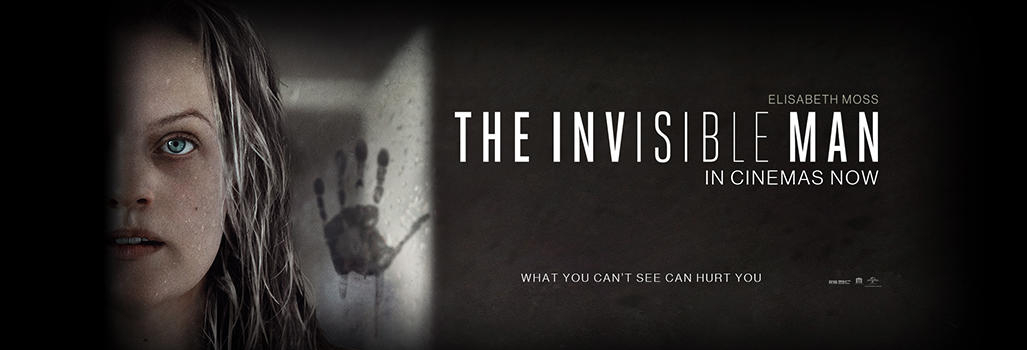
Leigh Whannell’s The Invisible Man (2020) is an ode to subtle, understated horror. Combining elements of sci-fi, thriller and something akin to dystopic surrealism, Whannell manages to thrust the spectator into the disturbing, isolated psychosis that is Cecilia’s (played marvellously by The Handmaid’s Tale‘s Elisabeth Moss) new reality.

Rife with twists and turns, you find yourself constantly questioning whether what is happening on-screen is merely a figment of Cecelia’s imagination or whether she truly is just the most unlucky woman when it comes to men. A horrific situation that many men and women alike have considered and feared before brought to life: just how messy can a break-up get? What do you do if you need protection from the one that should be protecting you? Will my past forever haunt me?

For poor Cecilia, she seems doomed to re-live her past trauma and abuse but with a disturbingly delicious twist – this time she won’t actually know if it’s her ex inflicting the torture or merely her own fragmented, deteriorating mind. A psychothriller concept that will leave most spectators with goosebumps, Whannell cleverly investigates the severely dark crevasses of abusive relationships and the difficulties (and dangers) associated with escaping them.

Even if you can’t see them, your trauma follows you. The Invisible Man will never let us forget that.

Candyman: Candyman, Candyman, Candyman…

Blog

Once I heard that the legendary Jordan Peele was heavily involved in the modern remake of the original 1992 Candyman, I knew I had to catch up. A horror that largely flew under the radar – at least within my social circles – I didn’t quite know what to expect. And to be perfectly honest, I am still not entirely sure whether I loved it or am merely indifferent towards it.

I have a soft spot for ’90s horrors. The camera grain, the constant haze from cigarette smoke, the great fashion. And generally the plots are fresh, new and interesting. Candyman is a legend within a legend – a film about the emotional and physical effects of urban legend storytelling. This is a fantastic fountain of material to tap into because urban legends abound and bringing them to life on-screen can create palpable, real fear. You’ve heard these stories told for a lifetime already after all… And now it’s real and in technicolour.

Candyman, for all intents and purposes, is a good film. But I can’t exactly say that it’s a terrifying film. I didn’t quite find myself afraid to look into the mirror for fear of seeing a meaty hook swinging towards my neck. It didn’t leave me with an enduring unease and discomfort as I had expected it to since the horror sounds like such an accessible kind. This could be down to the age of the production perhaps. Or perhaps Bernard Rose decided to focus on the thrill and spectacle of it more so than the fear. Regardless, the only thing that sent subtle shivers down my spine was the deep, bass-heavy voice of Candyman himself as he begs Helen to “be his victim”. There is something clever (and nosferatu-esque) in making your monster plead their target to let them in and the undeniable quasi-erotic connection between Helen and Candyman does add some depth and complexity to an otherwise simplistic film.

I applaud the film for its diversion from the white-washed nature of the majority of ’90s horrors. It clearly does touch on racial injustice in the sense that Candyman was once a victim of a kind of vicious hate crime. But that is as far as I can really go because I otherwise felt that the racial relations are strained and stereotypical. A white woman enters an ‘urban’ (I hate that word) housing project district unannounced and uninvited. She begins sniffing around other people’s property and even speaking to an unattended young boy (stranger danger, people!). The white privilege literally stinks up the screen for the majority of the story, especially since Candyman just had to claim a white woman’s soul to continue his legacy, like the white-man saviour narrative but reversed… I understand this was a different time but I know for a fact that the remake will make changes here and therefore make the movie a million times better as a result.

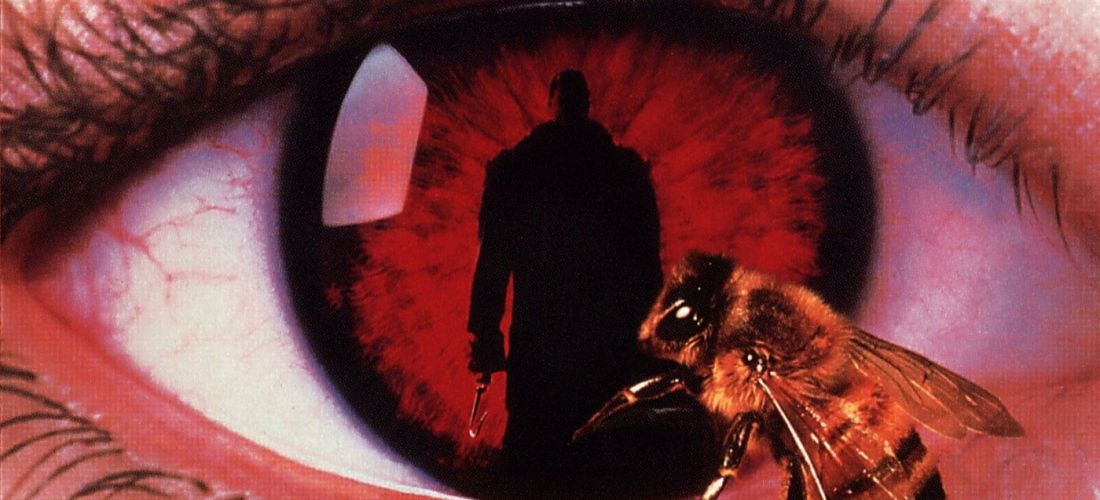
Did I say Candyman five times in front of a mirror after watching this? Of course not. I’ve seen too many horror movies to know that you just shouldn’t even bother playing those games. Call me superstitious all you like. I know this film has so much potential to be horrifying – a supernatural being with a bloody hook for a hand, a body filled to the brim with bees and a tendency to bisect people from the rectum-up? Yeah, scary stuff and I commend the original for introducing these concepts. I just wonder whether the new one will make him look like a pimp from Black Dynamite again…

Any criticism I have for this film has in no way diminished my desire to go see Peele’s rendition of this horror classic. If anything, it has actually increased my drive to get first in line for it. I have an undying faith in Jordan Peele’s artistic vision – he is a true auteur if ever I’ve seen one. I know he’ll be able to inject themes of race and social politics smoothly and effectively. The soundtrack will be both nostalgic and all-encompassing. The shots will be rich and experimental. And it will be creepy – oh it will be creepy. Peele has such nuance in his distinct style and I trust that as screenwriter and producer, he will be able to iron over any of the less-than-perfect elements of the original . I, for one, cannot wait.

His House: But not on his street

Blog

For Remi Weeke’s first film, His House (2020) is an exceptional drama, thrill and spectacle. I watch a lot of horror films so even when I deem a certain watch as ‘successful’, it could still be rather predictable and drab in terms of plot. I partially accepted that, at least for the time-being, we had more or less exhausted original material and therefore need to place more emphasis on the stylistic and aesthetic features to refresh an already told tale. But His House proved me wrong. It didn’t just prove me wrong, it shook me awake and had me begging for more.

Weeke’s film managed to be both terrifying, moving and socially-conscious all at the same time. It is a horror that doesn’t shy away from actual, concrete themes (other than solely death, good vs. evil or revenge) whilst still sprinkling in a healthy dose of jump-scares and ghoulish creatures. It evokes emotions beyond fear. It therefore develops into a living, breathing, three-dimensional life of its own – with a heart, mind and soul. It would have been easy for a film that it attempting to be so many things simultaneously to get away from you, but Weeke’s was able to restrain the entity he produced (and wrote), keeping it well within the bounds of reason and preventing any inadvertently comedic scenes.

His House illuminates the horror that is the refugee crisis. Bol and Rial are escaping one awful situation and entering into another, just in a different country. The dreary, run-down house provided to them by the UK government adequately expresses the lack of care and support given to those that are most vulnerable. The terror that proceeds to consume the couple’s lives is almost like their terrible situation made manifest. They were made to suffer in their homeland and the demons have followed them abroad (just as it would for anyone who has seen mass bloodshed, war and famine). And yet nothing is done for them – no counselling, no proper welcome, no acknowledgment of their lost language and culture. They are merely locked up in a strange house and left to stew in their own neuroses.

The setting choice is exquisite – what seems to be somewhere in the south of London, but an area that cleverly remains unidentified. Bol and Rial have entered into what is essentially a ‘no man’s land’, a limbo state where liminality dictates your every move and and a happy ending is impossible. Surrounded by ‘Others’ staring at them with unsettling blank eyes, they end up seeking refuge in their house, a house which carries all they brought with them from their traumatic past.

Regret, loss, desperation, relocation, assimilation. These are all themes that give life to the film. To what end do you go to save yourself and your wife? Who are you willing to sacrifice for your own survival? When surrounded by only death and suffering, does ethics even continue to exist? When a movie that has been advertised as a conventional horror manages to make you ask yourself all of these questions, it is a horror done right. His House has depth and a unique, refreshing form of symbolism that is so often lacking in contemporary horrors.

From one hell to another. This is what we are forcing upon refugees today. This is what we are forcing upon people who need help the most. This film is so effective because it makes this tragedy physically apparent. The decomposing, spindly arms of lost souls scratch through fading wallpaper, hallucinations of rough seas leave the audience feeling seasick and a literal demon king reaching into the skin of a survivor leaves you feeling queasy in a wholly different way. All of these scenes exist to evoke not only terror, but thought. Reflection. Change.

Watch His House. That’s all I have to say. By far one of the best horrors I have watched in the last couple months, and a British creation at that.

Uncategorized

Texas Chainsaw Massacre (2022): Bloody Laugh Riot

What number must this be now? Ten? The Texas Chainsaw Massacre franchise has certainly made much more than just a name for itself, and it’s clearly aiming to bleed that idea until it’s completely dry (partial pun intended). Beginning way back when in 1974, the iconic ‘Leatherface’ villain has gone through myriad re-writes, reboots and…

Army of the Dead: Ocean’s 11 Meets World War Z

Jack Snyder’s new 2021 Netflix film, Army of the Dead, is a complete joyride from start to finish. Absolutely jam-packed with wit, self-conscious cliches and enough blood and guts to fill an industrial wheat silo with, this is your classic zombie flick with a sweet twist. Blurring together two genres that I tend to never…

Ma: Anti-Bullying PSA

Ma (2019) honestly just made me feel really sad. Less of a spine-chilling horror and more of a slow burn, this film interrogates aspects of loneliness and childhood trauma in ways that make you reflect upon the nasty things you’ve had said to you or even the nasty things you’ve said to others in the…

Midsommar: Should have just gone to IKEA

Planning to watch Midsommar (2019)? The best advice I can give you is to prepare yourself for repetitive doses of extremely loud and spine-chilling moaning, sobbing and filleted bodies. Ari Aster, back just a year later from the revered Hereditary (2018), serves up an incredibly thought-provoking and mind-bending depiction of rural Swedish Pagan ritual and…

Orphan: Not the best ad for adoption services

Jaume Collet-Serra’s horror, Orphan (2009), is an interesting examination of grief, development and the process of moving on – or rather the inability to do just that. The plot is sprinkled with motifs of stunted growth, dysfunction and stagnation. Their child is almost entirely deaf, the parents are trapped in a superficially ‘perfect’ marriage that…

Something went wrong. Please refresh the page and/or try again.