
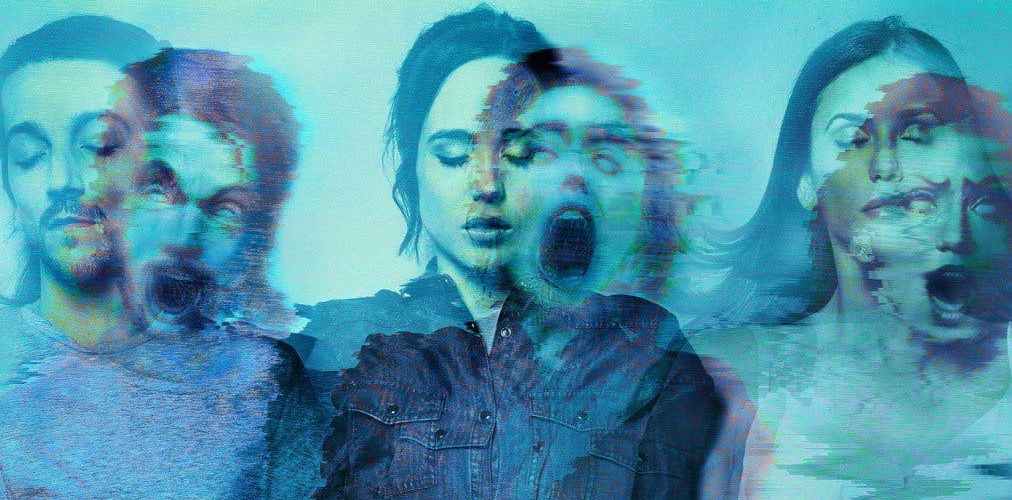
Flatliners (2017) seems a strange film to start off with on a horror blog, but it just so happens that I watched it the other night and was surprised by what I was confronted with. Although I would probably classify this as closer to the realm of psychological thriller, there are subtle horror tropes and techniques that could leave people on the edge of their seats. I personally was not one of them, but I’m sure they’re out there somewhere.
I went into this movie blind. I didn’t know what it was about or which genre conventions it would abide by – all I knew was that Ellen Page was in it and her performance in Juno rendered me speechless so I thought, “yeah ok, it looks sort of gritty, I’ll give it a go.” I think the opening scenes of a horror film is of such vital importance that it cannot ever be overlooked. It completely sets the tone of the film to come, tells the viewer exactly how on their guard they’ll need to be, and gives us a tantalising taste of just how messed up the inner-workings of the creator’s mind or psyche is (obviously the more messed up, the better when it comes to horror – we love a subtle psychopath). So, more than any other genre, I have really high expectations for the expository scene in a ‘scary’ movie. Flatliners didn’t really disappoint. Niels Arden Oplev (why is it that so many psychologically-warped films are directed by Scandinavian creators? Regardless of the reason, I love it and I never want them to stop) doesn’t miss a beat as in the first couple minutes a little girl dies in a brutal car crash. So you know immediately that Oplev isn’t here to play nice and that he holds no qualms about killing off children. Always good to know about a film. Not to mention, the death of the child is technically at the hands of the older sister – played by the talented Ellen Page – who becomes distracted and drives the car off the road into a river. So we’re already dealing with death, guilt, and shame and the film has literally only been playing for about three minutes. I was pleasantly surprised (not that I enjoy seeing horrific car crashes, but this is fiction so we embrace it) and I was ready for more.
Unfortunately, Flatliners ended up taking its name a bit too seriously. After a promising beginning, the movie struggled uphill before stagnating and eventually the dull, monotonous drone of a flatline could be heard all around me. The film’s heart stopped beating, its conceptual framework and execution flatlined. I do think that the afterlife is a fascinating topic, particularly because everyone seems to perceive it differently. Some fear it, some revere it, some refuse to believe in anything past our current existence. So a quasi-horror that aims to grapple with a concept so complex and divisive has a lot on its plate, but also a hell of a lot (pun intended) to experiment with. I appreciate Oplev’s and the entire creative team’s attempt to mix up what horror so often defaults to nowadays (haunted houses, paranormal possessions, mothers gone rogue), but I just wish they had taken more advantage of how strange the concept of the afterlife could really be. The characters in Flatliners are playing with death. They are trying to control and test the boundaries of human life. Similar to films like Final Destination, you can’t knock on the door of death only to change your mind and race back to a calm, secure existence. So as each character, one by one, begins to ‘go to the other side’ for the sake of ‘scientific research’ they are essentially sealing their own fate. I’ve seen enough zombie-flicks to know that if you die once, you should just stay dead because nothing good becomes of it otherwise. I tried my best to shrug off how ridiculous the fact that training medical students would literally kill themselves just to get into a good residency, which definitely was tough at times. But I tried to be as on-board as I could and I was digging the idea behind it all. What does happen to us after we die? Where do we go? How does it feel? Do we live on? All very big questions.
But these questions were too ambitious for this film. I was really hoping for more of a personal, mental disintegration within each character – as if a part of their brain or soul remained intrinsically bound to the afterlife and the pull towards death became stronger and stronger as the film progressed, reducing them to mere husks of human beings with no real emotional or cognitive ability. But instead it just sort of fizzled out into a quintessential haunting-flick. Something deep, dark, and repressed from each of their pasts was brought back up to the surface and tried to kill them, proving once again that, try as we might, we can’t cheat death. But this just made the horror feel so detached and impersonal. The moral of the story basically just became ‘repent and ye shall be saved’… Which is so overdone and just lame. It would have been way creepier if these were your average medical students who tried hard at school, were selfless, loving, and kind – not people that faked autopsy reports and ditched women they got pregnant. Where are all the horror films about good people facing an unexplainably horrible evil instead of yet another horror about the good/bad binary and moral relativism? We’re grown adults, we don’t always have to be told that characters did bad things and that’s why they’re being psychologically tortured. We love the unexplained and the unexplainable! That’s what is the most terrifying.
I have to give kudos to Oplev and the whole Flatliners team for their effort to bring something unique and different to the quasi-horror universe (despite the fact that there is a 1990 original…). I dig the thought of tracking something so abstract and unknown technologically. But you guys needed to take it about 15 steps further – more people needed to suffer/die and the ending needed to be a bit more ambiguous – how are we supposed to believe that we as humans truly are smart enough and strong enough to genuinely cheat death? That’s a sticky moral to leave the theatre with…
 Nell's Little Shop of Horrors